Kyrgyzstan is one of the easiest countries in Central Asia to travel on your own. Minibuses link almost every town, homestays are everywhere, prices are low, and people are genuinely welcoming to someone who turns up alone with a backpack.
But "easy" doesn't mean "obvious". The best places, the high lakes, yurt camps and remote caravanserais, sit at the end of dirt roads with no public transport. The visa rules changed in 2026. And cash still matters more than cards once you leave Bishkek.
This guide is written for solo travelers who want to do Kyrgyzstan independently: arrive, figure it out on the ground, and move at their own pace. You'll get two complete routes (10 and 14 days), how to get between every stop, realistic costs, and, honestly, the few places where a driver or local guide saves you a lot of trouble.
Can you travel Kyrgyzstan without a tour?
Yes. Thousands of backpackers do it every summer. You can cover the main highlights, Bishkek, Karakol, Issyk-Kul, Kochkor, Song-Kol and the south, using marshrutkas (shared minibuses), shared taxis and the occasional domestic flight.
What you need to accept:
- Long road days. Bishkek to Karakol is 6-7 hours. Bishkek to Osh by road is a full day.
- "Leaves when full." Most minibuses and shared taxis don't run on a timetable. Arrive at the bus station in the morning and you'll rarely wait long; arrive mid-afternoon and you might.
- Some places have no public transport at all. Song-Kol lake and Tash Rabat are the big ones. You'll hire a jeep or a taxi for that leg, on your own or shared with other travelers.
- Basic Russian helps. Numbers, place names and "how much?" will get you a long way. A translation app with offline Russian covers the rest.
If that sounds like an adventure rather than a problem, you'll love it.
Before you go: the practical stuff
Visa rules changed in 2026: check yours
This is the part most older blogs get wrong. Since 31 December 2025, citizens of 55 countries, including the USA, UK, Canada, Australia, most of the EU (Germany, France, Italy, Spain, Netherlands, Poland and others), Switzerland, Norway, South Korea, Japan, Singapore and Israel, can stay in Kyrgyzstan visa-free and without registration for up to 30 days within any 60-day period. Before that it was 60 days.
Other nationalities have different rules (for example, citizens of Turkey, Serbia, Ukraine and Mongolia can stay 90 days within 180; Gulf states 180 days within 360). If you're not visa-free, you can apply for an e-visa on the official portal: evisa.e-gov.kg.
What this means for your itinerary: both routes below fit comfortably inside 30 days. If you want to combine Kyrgyzstan with Kazakhstan, Uzbekistan or Tajikistan, count your days carefully: the 30 days are cumulative within the 60-day window.
Always double-check the current rule for your passport before you fly. More on arrival logistics in our guide to getting to Kyrgyzstan from abroad.
Money: carry cash
- The currency is the Kyrgyz som (KGS). As of October 2026, 1 USD ≈ 87 KGS.
- Cards work in Bishkek supermarkets, many restaurants and hotels, but homestays, yurt camps, marshrutkas, shared taxis and bazaars are cash only.
- Withdraw in Bishkek, Karakol, Naryn or Osh before heading into the mountains. Song-Kol has no ATMs and no shops. Arslanbob has no ATM either: the nearest is in Bazar-Korgon, about 30 minutes away.
- 6-digit PIN? Many ATMs only accept 4-digit PINs. Newer Demir Bank machines, Optima Bank and KICB are known to accept 6-digit PINs.
- Carry small notes (50, 100, 200 som) for minibuses and snacks: drivers often can't break a 5,000 note.
SIM card and apps
Buy a local SIM at Bishkek airport or any phone shop in town (MegaCom, Beeline and O! are the main networks; you'll need your passport). A month of data costs a few dollars. Coverage is good in towns and along main roads, and disappears in the mountains. That's normal.
Download before you go:
- Yandex Go: taxis in Bishkek and Osh, metered, no haggling.
- 2GIS: the best city maps for Bishkek and Osh, works offline.
- Maps.me (or another offline map with hiking trails): download the whole country on Wi-Fi before you head to the mountains.
- WhatsApp: how almost every homestay, driver and guesthouse takes bookings.
- Google Translate with offline Russian.
When to go
For these routes, go between mid-June and mid-September. Song-Kol is only accessible in summer (roads are snowed in roughly from October to May), and the high passes around Karakol are often still snowy in early June. Our best time to visit Kyrgyzstan guide breaks this down month by month. Coming between December and March instead? That's a different trip, and we wrote Kyrgyzstan in winter for it.
Getting around Kyrgyzstan on your own
From the airport
Manas International Airport is about 25 km from central Bishkek. Marshrutka 380 runs from just outside the terminal roughly between 6:30 am and 8:30 pm and takes about 40 minutes to the city, and it costs very little. A Yandex Go taxi is the easy option at any hour. Ignore drivers in the arrivals hall who say there's no bus. There is.
Marshrutkas (shared minibuses)
The backbone of independent travel. They connect all major towns, leave when full, and cost a few dollars per ride. Long-distance routes to Issyk-Kul, Karakol, Kochkor and Naryn leave from Bishkek's Western (New) Bus Station. Pay the driver, usually at the end of the trip.
Shared taxis
Faster than marshrutkas and a bit more expensive. Cars wait at bus stations and bazaars; drivers shout the destination and leave when all four seats are sold. You can buy all four seats if you want to leave right away or stop for photos. Always agree the price per seat before getting in, and ask your homestay what's normal first.
Domestic flights
Bishkek ↔ Osh takes under an hour instead of 10-12 hours by road. Since May 2026, fares on this route are capped: the state carrier Asman Airlines has a maximum fare of 5,500 som. For a 14-day trip that includes the south, flying one direction saves you a full day.
Jeeps and private drivers
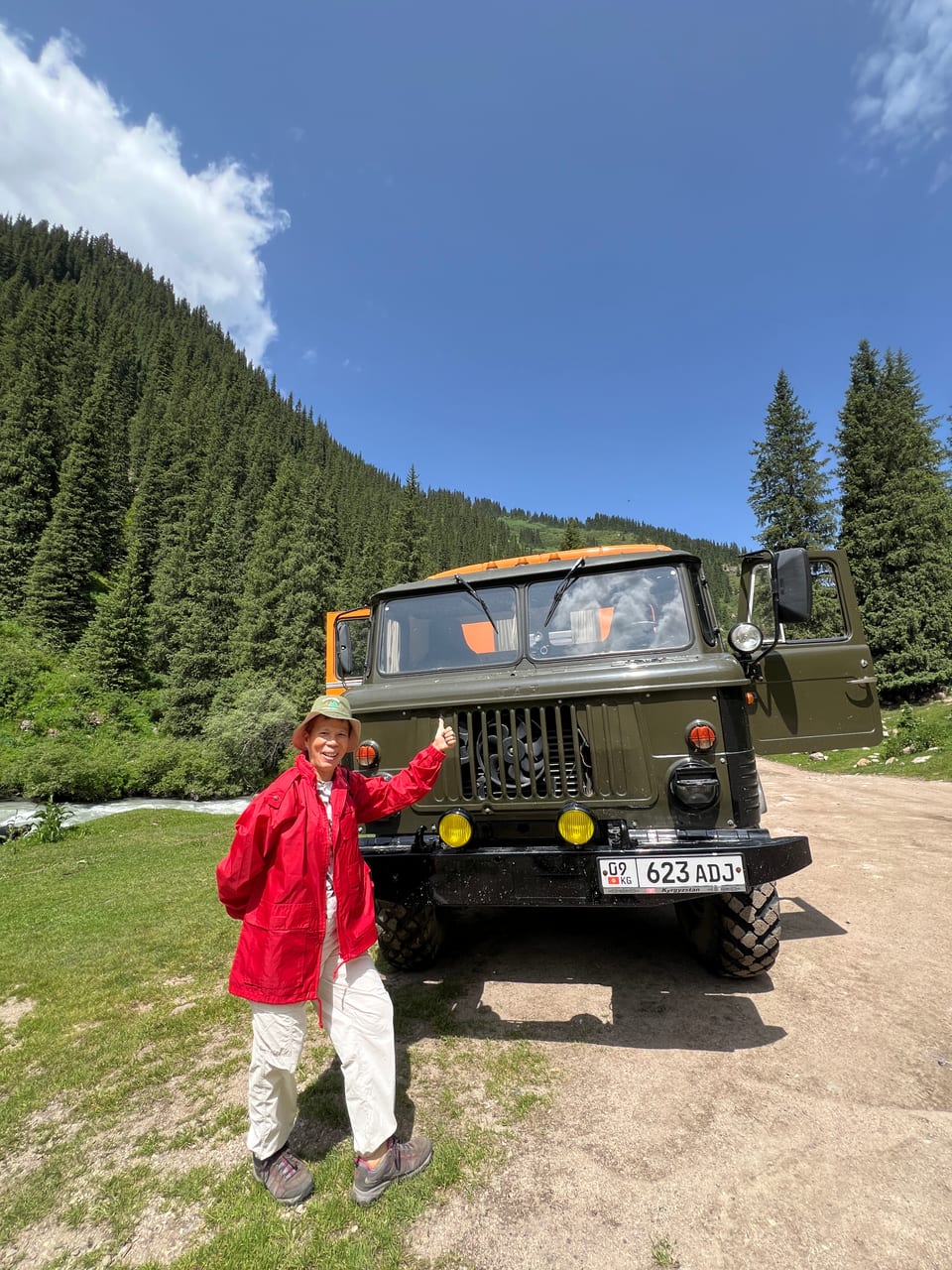
For Song-Kol, Altyn-Arashan and Tash Rabat you'll need a 4×4 or a private car. Arrange it through your homestay, the local Community Based Tourism (CBT) office, or other travelers at your hostel: splitting a car four ways makes it cheap. If you can't find anyone, message us and we can put you in touch with a driver.
10-day Kyrgyzstan itinerary: the northern loop
Route: Bishkek → Karakol → Issyk-Kul south shore → Kochkor → Song-Kol → Bishkek
This is the classic first-time loop and the best one for solo travelers: good transport, lots of other backpackers to share jeeps with, and the country's most famous landscapes.
Day 1: Arrive in Bishkek
Get a SIM, withdraw cash, and settle in. Bishkek isn't a city of big sights, but it's green, relaxed and a good place to get your bearings. Walk Ala-Too Square and the parks around it, then head to Osh Bazaar for dried fruit, nuts and your first plov. Sleep early: tomorrow is a long road day.
Day 2: Bishkek → Karakol
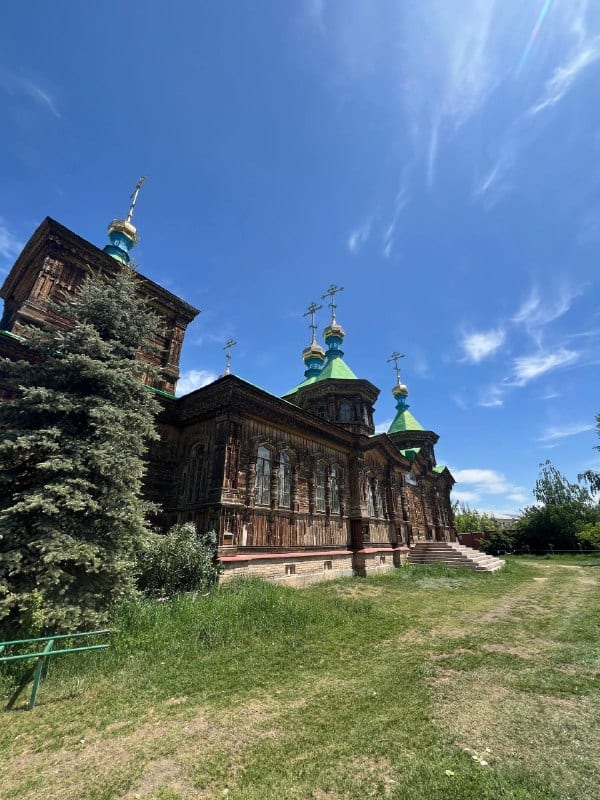
Take a morning marshrutka from the Western Bus Station to Karakol (6-7 hours along the north shore of Issyk-Kul). Sit on the right side for lake views. In the evening, walk around town: the wooden Holy Trinity Cathedral and the pagoda-style Dungan Mosque are both short walks from the center.
Days 3-5: Mountains around Karakol
Karakol is the trekking capital of Kyrgyzstan and the best base for solo hikers. Pick one of two options:
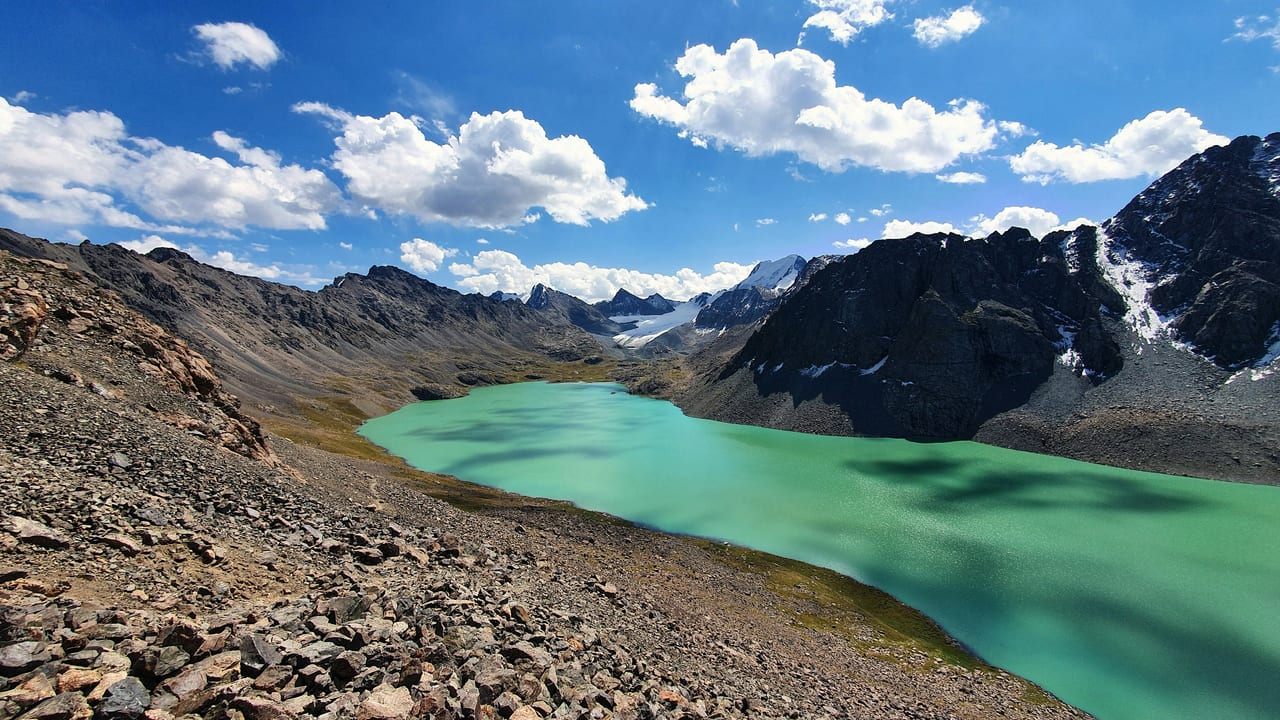
- Ala-Kul lake trek (3 days). The country's most famous hike: up through the Karakol valley to a turquoise lake at about 3,500 m, over a pass, and down to the hot springs of Altyn-Arashan. It's done independently by many travelers, but it's a serious high-altitude trek, so read our full Ala-Kol trek guide before you go.
- Altyn-Arashan (2 days, easier). Hike or take a jeep up to the hot springs valley and stay in a guesthouse there. A jeep for the whole car costs around 4,000 som each way, easy to split with others.
On a Sunday, don't miss Karakol's early-morning animal market.
Day 6: Jeti-Oguz and the south shore
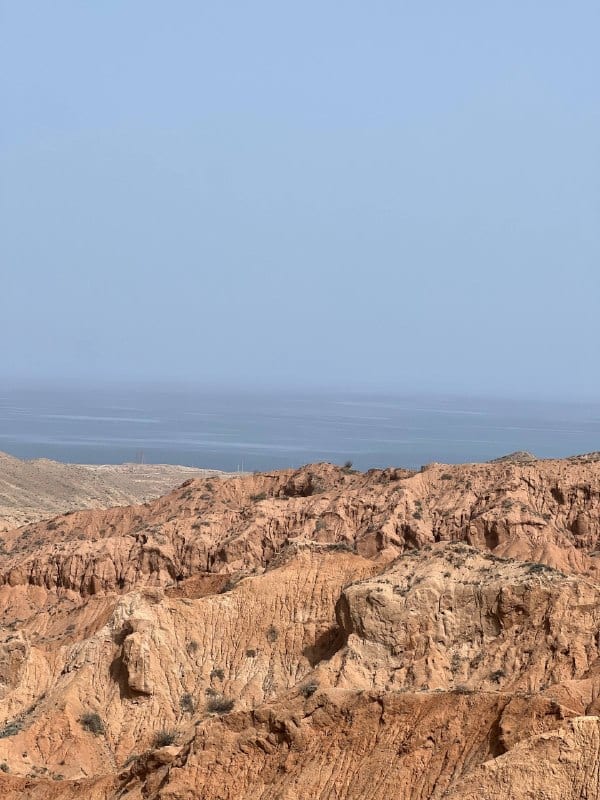
Head west along the quieter south shore of Issyk-Kul. Stop at Jeti-Oguz (the red "Seven Bulls" rocks) and continue to Skazka (Fairytale) Canyon near Tosor, wind-carved red and orange rock formations a short walk from the lake. Spend the night in Tamga, Tosor or Bokonbaevo at a guesthouse or yurt camp on the shore.
South-shore marshrutkas run less often than on the north side, so a shared taxi is often simpler here. Ask your Karakol guesthouse which departures run that day.
Day 7: South shore → Kochkor
Continue to Balykchy at the western tip of the lake, then take a shared taxi or marshrutka to Kochkor (about 1 hour). Kochkor is a small, dusty town, and it's the gateway to Song-Kol. Go to the CBT office or ask your homestay to arrange transport to the lake for tomorrow. In the afternoon, visit a felt (shyrdak) workshop: Kochkor is the felt capital of Kyrgyzstan.
Days 8-9: Song-Kol lake
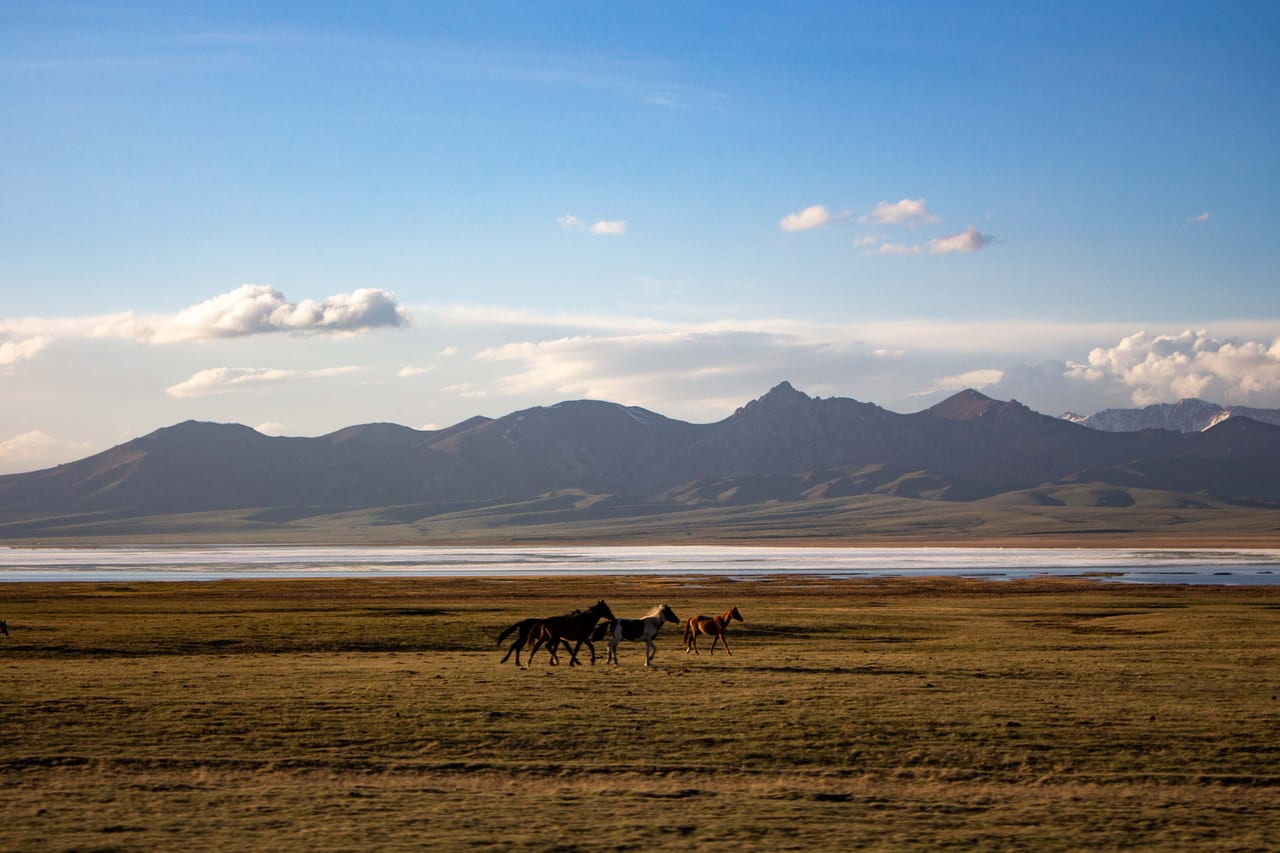
Song-Kol is a huge alpine lake at about 3,000 m, surrounded by summer pastures where herders live in yurts from June to September. There's no village, no shops, no phone signal, and no public transport. You have two ways up from Kochkor:
- By 4×4 (2-3 hours). A car through CBT Kochkor costs roughly $60-80 per vehicle. Find other travelers to split it.
- By horse (2-3 days). The classic way to arrive: ride over the mountains, sleeping in a herder's yurt on the way. No riding experience is needed. This is arranged with a local horseman and guide, and it's one of the best experiences in the country.
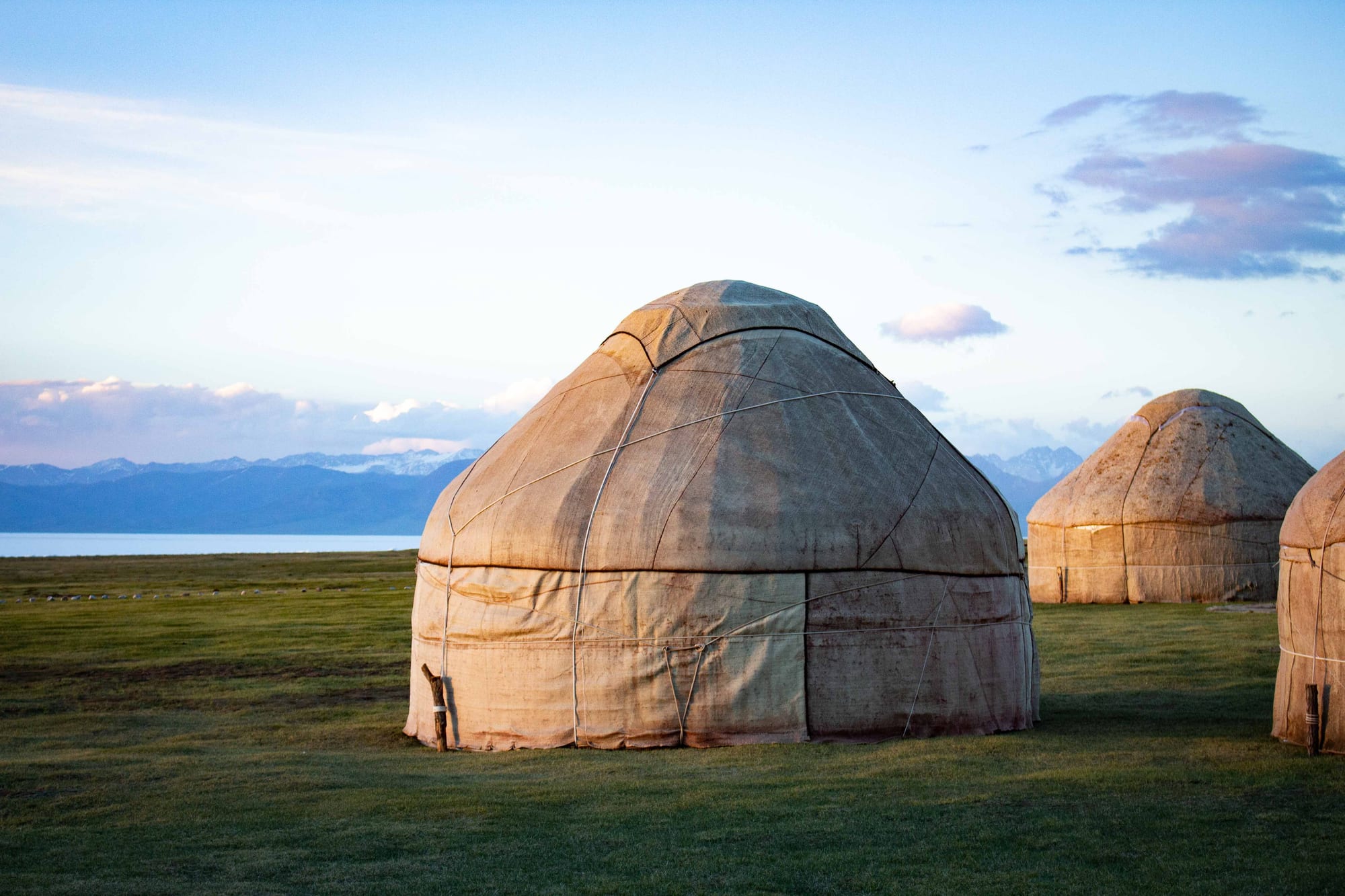
At the lake, stay in a family yurt camp (dinner and breakfast are usually included). Walk the shore, ride a horse, drink kymyz (fermented mare's milk) if you're brave, and watch the stars: on a clear night they're unreal. Before you go, read our short guide to yurt etiquette so you know what to expect as a guest.
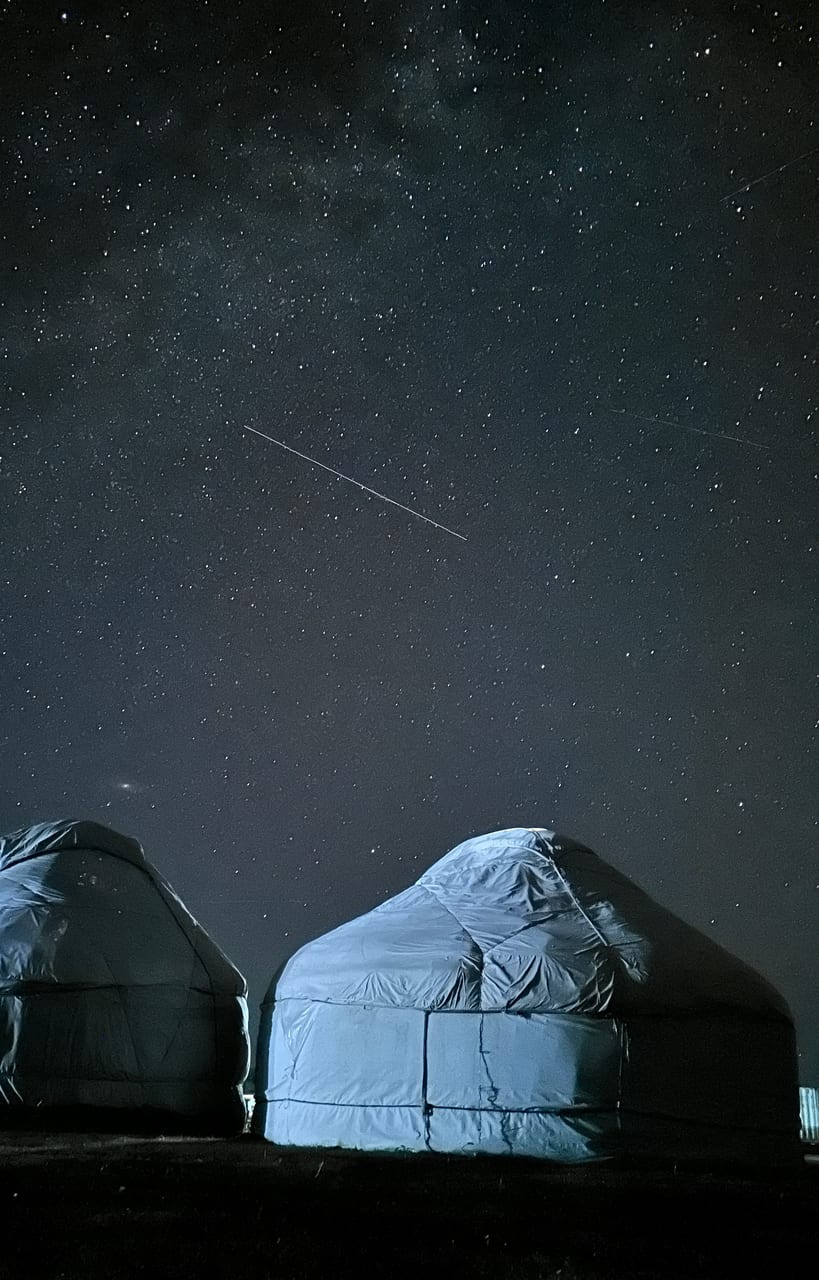
Nights are cold even in July. Bring a warm layer and a hat.
Day 10: Song-Kol → Kochkor → Bishkek
Drive back down to Kochkor in the morning and take a marshrutka or shared taxi to Bishkek (about 3-4 hours). Celebrate with a proper dinner. You've earned it.
14-day Kyrgyzstan itinerary: add Naryn & Tash Rabat or the south
Have two weeks? Do the 10-day loop above and add one of these extensions. Trying to do both in 14 days means too many 8-hour road days.
Option A: Naryn and Tash Rabat (+4 days, more remote)
From Song-Kol, instead of returning to Bishkek, continue south.
- Day 10: Song-Kol → Naryn. Arrange a driver from Song-Kol or go back via Kochkor and take a shared taxi to Naryn (about 3 hours from Kochkor). Withdraw cash here.
- Day 11: Naryn → Tash Rabat. There's no public transport to Tash Rabat. Hire a taxi from Naryn (around 3,000 som for the car, about 2 hours) or take a shared taxi to At-Bashy and find a car from there. Stay in a yurt camp next to the caravanserai.
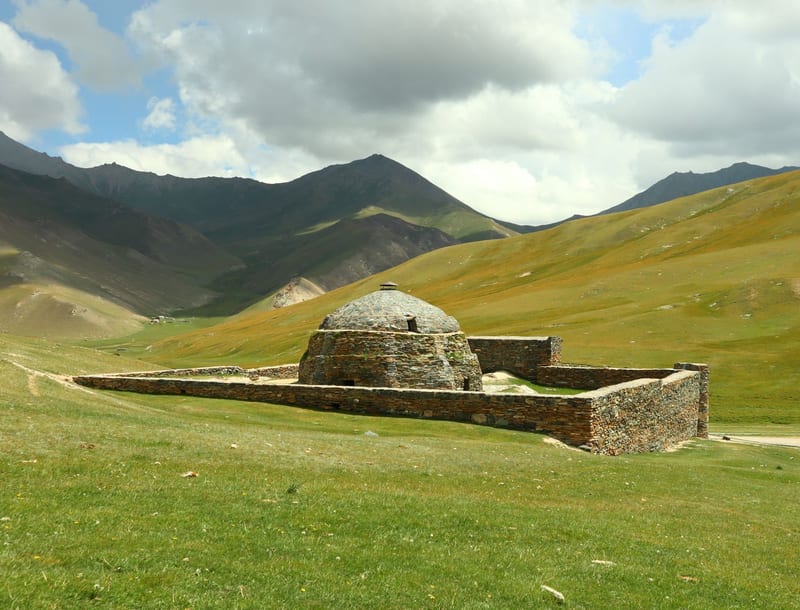
- Day 12: Tash Rabat. Explore the 15th-century stone caravanserai, a Silk Road waystation hidden in a mountain valley at about 3,500 m. Hike or ride up the valley for views; experienced riders can go towards Chatyr-Kul lake with a local guide.
- Days 13-14: Back to Bishkek via Naryn (Naryn → Bishkek is about 5-6 hours by shared taxi), with a buffer day for the long drive.
Option B: The south, Arslanbob and Osh (+4 days, more cultural)
From Bishkek, fly or drive south. The south feels like a different country: Uzbek-speaking villages, walnut forests, the Fergana Valley and Central Asia's oldest bazaar.
- Day 11: Bishkek → Arslanbob. Either take a shared taxi towards Jalal-Abad and get off at Bazar-Korgon (8-9 hours), then a marshrutka up to the village, or fly to Jalal-Abad and continue by road. Withdraw cash in Bazar-Korgon: there's no ATM in Arslanbob.
- Day 12: Arslanbob. Hike through the world's largest natural walnut forest to the Big Waterfall. Stay in a CBT homestay: they're some of the best in the country, and the plov here is famous.
- Day 13: Arslanbob → Osh. A morning marshrutka or shared taxi takes about 4-5 hours (or go via Bazar-Korgon and Jalal-Abad). In Osh, climb Sulaiman-Too, the sacred mountain in the middle of the city, at sunset.
- Day 14: Osh → fly to Bishkek. Spend the morning at Jayma Bazaar, then take the short flight back to Bishkek. It saves you 10+ hours on the road.
Shorter trip? A 7-day version
With only a week, keep it simple: Bishkek (1 night) → Karakol (3 nights, with a 2-day Altyn-Arashan hike) → south shore (1 night) → Kochkor → Song-Kol (1 night) → Bishkek. It's tight, but it works in summer. Just don't try to add the Ala-Kul trek as well.
How much does it cost? A realistic solo budget
Kyrgyzstan is cheap for independent travelers. A typical solo backpacker staying in hostels and homestays spends around $30-40 per day; with more private rooms, jeeps and horse treks, plan for $50-70.
| Expense | Typical cost (2026) |
|---|---|
| Hostel dorm bed (Bishkek, Karakol) | $8-12 |
| Homestay with dinner & breakfast | $15-25 |
| Yurt camp with meals (Song-Kol, Tash Rabat) | $15-30 |
| Café meal (lagman, plov, shorpo) | $3-6 |
| Marshrutka Bishkek → Karakol | $6-10 |
| Shared taxi seat, mid-distance | $3-10 |
| 4×4 Kochkor → Song-Kol (whole car) | $60-80 |
| Jeep to Altyn-Arashan (whole car, one way) | ~$45 |
| Taxi Naryn → Tash Rabat (whole car) | ~$35 |
| Flight Bishkek → Osh | up to ~$63 (5,500 som cap on Asman Airlines) |
Prices are in US dollars at about 87 som per dollar and are indicative. Always confirm locally. Transport to the remote places is your biggest cost, which is why sharing cars with other travelers matters so much. For how we price our own trips, see fair, honest pricing.
Where DIY gets hard (honest advice)
Most of Kyrgyzstan is easy to do on your own. A few things aren't, and it's better to know before you go.
- Song-Kol and Tash Rabat have no public transport. You'll pay for a car either way. Solo, that's the most expensive part of the trip unless you find people to share with: easy in July and August, harder in June or September.
- The weather in the mountains changes fast. Snow on passes in summer is normal, and a sunny morning can turn into a storm by 2 pm. On treks like Ala-Kul, start early and don't go alone if you're inexperienced. Read our mountain safety guide.
- Horse treks need a local horseman. You can't rent a horse and ride off alone, and you wouldn't want to. A local guide knows the pastures, the families and the weather.
- Shoulder season is quieter, for better and worse. In June and September there are fewer travelers to share jeeps with, and yurt camps at Song-Kol start closing in September.
- The language gap grows outside cities. In villages, little English is spoken. Homestay hosts are usually great at helping you arrange the next leg. Ask them.
None of this is a reason not to travel independently. With a bit of patience, everything in this guide is doable on your own.
If you're looking for a Bukhanka or UAZ jeep up to Altyn-Arashan, a trekking guide, a driver heading in a particular direction, or a car with a driver for a few days, message us on WhatsApp or email us at azatbeyshenaliev1@gmail.com. We know the drivers and guides in these valleys and are happy to help you find the right person.
And if, after reading it, you'd rather spend your time in the mountains than at bus stations negotiating jeeps, that's what we're here for. Our tailor-made trips are built around your dates and interests, solo travelers included, with transport, stays and local guides who grew up in these valleys. We also work with local families through community-based tourism, so your money stays in the villages you visit.
Tips for solo travelers in Kyrgyzstan
- Stay in hostels and homestays to meet people. That's how you find others to split jeeps with. Karakol and Kochkor hostels are full of travelers heading the same way.
- Start travel days early. Morning departures fill fastest and you'll arrive before dark.
- Agree prices before every ride. Per seat or per car? To the center or to the bus station?
- Keep your passport on you. Police checks are rare but possible, and you need it for SIMs and some guesthouses.
- Solo women: Kyrgyzstan is generally considered safe for women traveling alone. Dress a little more conservatively in the south and in villages, and use Yandex Go in cities at night.
- Drink bottled or boiled water and carry some snacks: roadside cafés can be far apart.
- Accept the tea. Hospitality is a big part of Kyrgyz culture. If you're invited in, it's fine to accept, and fine to politely decline.
Common questions
How many days do you need in Kyrgyzstan?
10 to 14 days is ideal for a first trip. In 10 days you can see Bishkek, Karakol, Issyk-Kul, Kochkor and Song-Kol. With 14 days you can add either Naryn and Tash Rabat or the south (Arslanbob and Osh). A week is possible but rushed.
Can I visit Song-Kol without a tour?
Yes. Get to Kochkor by marshrutka or shared taxi, then arrange a 4×4 (about 2-3 hours, roughly $60-80 per car) or a 2-3 day horse trek through the CBT office or your homestay. There's no public transport to the lake, and it's only accessible from about June to September.
Is Kyrgyzstan safe for solo travelers?
Yes, Kyrgyzstan is one of the safer countries in Central Asia for solo travelers, including women. The main risks are road accidents and mountain weather, not crime. Use common sense, agree taxi prices in advance, and don't hike high passes alone without experience.
Do I need a visa for Kyrgyzstan in 2026?
Citizens of 55 countries, including the USA, UK, Canada, Australia, most EU countries, South Korea and Japan, can visit visa-free for up to 30 days within any 60-day period (this rule has applied since 31 December 2025). Other nationalities may need an e-visa from evisa.e-gov.kg. Always check the current rule for your passport before you travel.
How much money do I need for two weeks in Kyrgyzstan?
A solo backpacker staying in hostels and homestays typically spends $30-40 per day, so roughly $450-600 for two weeks plus flights. Add more for private jeeps, horse treks or internal flights. Carry cash: homestays, yurt camps and shared transport don't take cards.
Do I need to speak Russian?
No, but it helps a lot. Learn numbers, greetings and "how much?", download offline Russian in Google Translate, and you'll manage fine. In Bishkek and Karakol many young people and hostel staff speak some English.
What's the best way to get around Kyrgyzstan without a car?
Marshrutkas (shared minibuses) and shared taxis between towns, Yandex Go taxis in Bishkek and Osh, a domestic flight between Bishkek and Osh, and hired 4×4s for remote places like Song-Kol, Altyn-Arashan and Tash Rabat.
Inspired?
Turn this into a real trip
Build your Kyrgyzstan adventure in 5 visual steps and a local expert sends a tailored plan within 24 hours. Free, no prepayment.