Nobody likes a price that grows after you've said yes. So ours don't.
What a quote includes
When we send you a price, it's the real one: guide, transport, accommodation, the agreed activities, and most meals on multi-day routes. We spell out what's in and what's not, line by line, so there are no surprises in the mountains. The usual out-of-pocket list is short: drinks, souvenirs and tips, and tips are appreciated, never required.
Why our tours say "price on request"
Fair question: why not print one big number on every tour page? Because one number would be wrong for most people. The same nine-day route costs different money for two people and for six, in July and in September, in guesthouses and with a full camp crew. A package price has to be padded to cover every case; a personal quote only has to cover yours. So we quote per trip: tell us dates and group, and you get the real number within 24 hours, itemised.
How a quote is actually built
No mystery. A trip is transport (vehicle, fuel, driver days), guiding, nights (guesthouse, yurt camp, hotel), activities (horses come with their own logistics, a horseman travels with the group), and food. We price each part from current local rates for your dates, and our work carries one margin on top, not a markup at every layer. When you see the itemised quote you can move the sliders yourself: fewer vehicle days, more nights in one place, a different mix of camps and guesthouses.
How we keep it fair
- Transparent quotes, itemised so you can see where your money goes
- No hidden extras bolted on later: what we agreed is what you pay
- A best-price promise, because we work direct, not through layers of middlemen
- Local economics: our guides, drivers and host families are paid here, fairly, which is leaner than an imported supply chain and better for the valleys, see where your money stays
Enquiring is free and you don't pay to plan. You only commit when the trip is right.
Tell us your budget, really
The most useful sentence in trip planning is an honest budget. For us it is not a negotiating position, it is a design constraint. Tight budget? September dates, guesthouses over camps, or a shorter variant of the same route, most of our routes exist in several lengths, the overland road trip alone runs from 7 to 12 days. Room to spare? We will tell you where extra money genuinely buys a better trip, a rest day, a more comfortable vehicle for the long drives, and where it would just buy padding.
What "no hidden extras" means in practice
Changes on the ground happen: weather closes a pass, the group falls in love with a lake. When plans shift, we talk about any cost difference before it happens, not on the last evening. If a change saves money, that comes back to you too. The rule is boring and simple: no surprises in either direction.
Currency and paying
Quotes come in US dollars because that is what most travellers compare in; on the ground the currency is the Kyrgyz som, about 87 to 90 to the dollar in 2026. How and when to pay is agreed per trip, and enquiring costs nothing, there is no deposit just to hold a conversation. The practical money side of travelling here, cash, cards, ATMs, tipping, is covered in the travel guide.
Tailored, not inflated
Because every trip is custom, the price reflects your group size, season and choices, not a padded package rate. And value here is honest to both sides: fair for you, and fair for the families and guides doing the work. Cheap at someone else's expense is not a deal we sell.
Fair pricing is really just respect. Tell us your budget honestly and we'll tell you honestly what's possible.
See it in practice
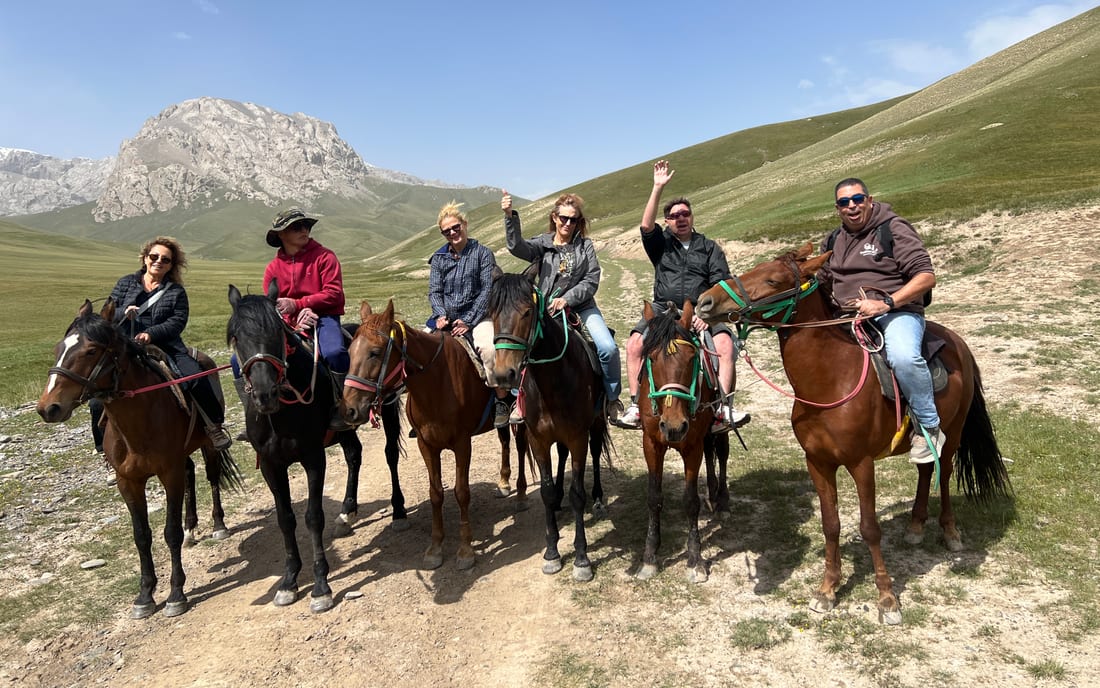
Every tour page lists exactly what's included, day by day: compare the Song-Kul and Kel-Suu road trip (9 days) with the compact Song-Kul ride and Altyn-Arashan trek (5 days) and you'll see the same open approach on both.
Inspired?
Turn this into a real trip
Build your Kyrgyzstan adventure in 5 visual steps and a local expert sends a tailored plan within 24 hours. Free, no prepayment.