Most people picture Kyrgyzstan in summer: green pastures, yurts and turquoise lakes. But from December to March the country turns into something completely different. Deep snow in the Tian Shan, empty powder slopes, steaming hot springs and some of the cheapest ski passes you'll find anywhere.
And travelers are noticing. Kyrgyzstan's National Statistical Committee counted 378,571 winter visitors between December 2025 and February 2026, 47% more than the year before, with ski resorts alone receiving around 192,500 visits.
This guide covers everything you need to plan a winter trip: where to ski, what to do if you don't ski, what the weather is really like, what's closed, a 7-day winter route and realistic costs.
Is Kyrgyzstan worth visiting in winter?
Yes, if you come for the right things. Winter is a great time for:
- Skiers and snowboarders who want uncrowded slopes and low prices. Karakol is the main resort; Jyrgalan is a growing freeride and ski-touring destination.
- Hot spring lovers. Soaking in hot mineral water surrounded by snow is one of the best winter experiences in the country.
- Culture. Traditional eagle hunting takes place in winter, and villages around Issyk-Kul are quiet and welcoming.
- Photographers. Clear, cold days, snowy peaks and frozen canyons.
Winter is not the time for multi-day treks, high mountain lakes like Song-Kol or Ala-Kul, or yurt stays on summer pastures. Those are summer experiences. If that's what you're after, see our best time to visit Kyrgyzstan guide and our summer itinerary.
Winter weather in Kyrgyzstan, month by month
Kyrgyzstan has a continental mountain climate: cold, mostly dry winters with a lot of sunshine. Temperatures depend hugely on altitude. Bishkek and the Issyk-Kul shore are far milder than the ski slopes and high valleys.
| Month | What to expect |
|---|---|
| November | Winter arrives. Snow in the mountains, first ski bases open at the end of the month. Changeable weather. |
| December | Ski season starts properly. Cold but often sunny. Busy around New Year (31 Dec to about 10 Jan) when prices at ski resorts go up. |
| January | The coldest month and usually the best snow. Nights in the mountains can drop to around −20 °C. Clear skies. |
| February | Still deep winter, but days get longer. Often the best month overall for skiing and touring. |
| March | Spring starts at lower altitudes; skiing continues at Karakol until around the end of the month. Nooruz (Persian New Year) celebrations on 21 March. |
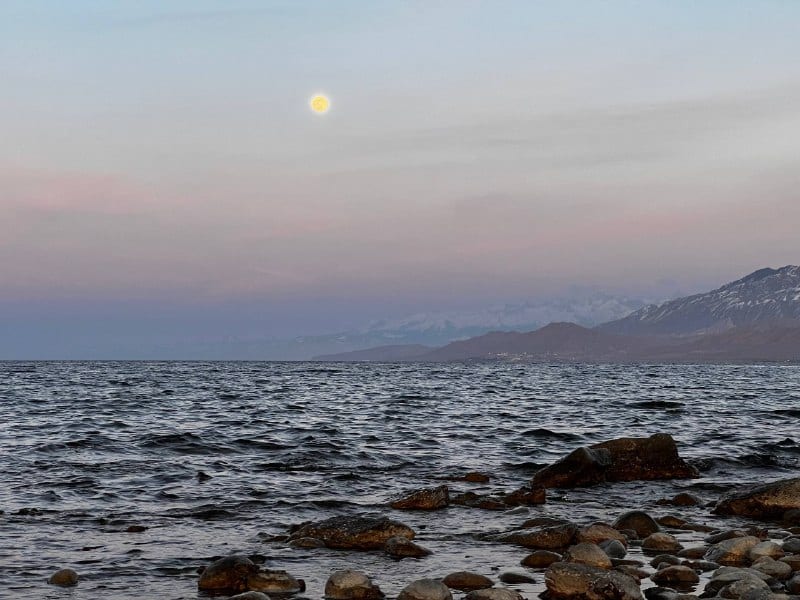
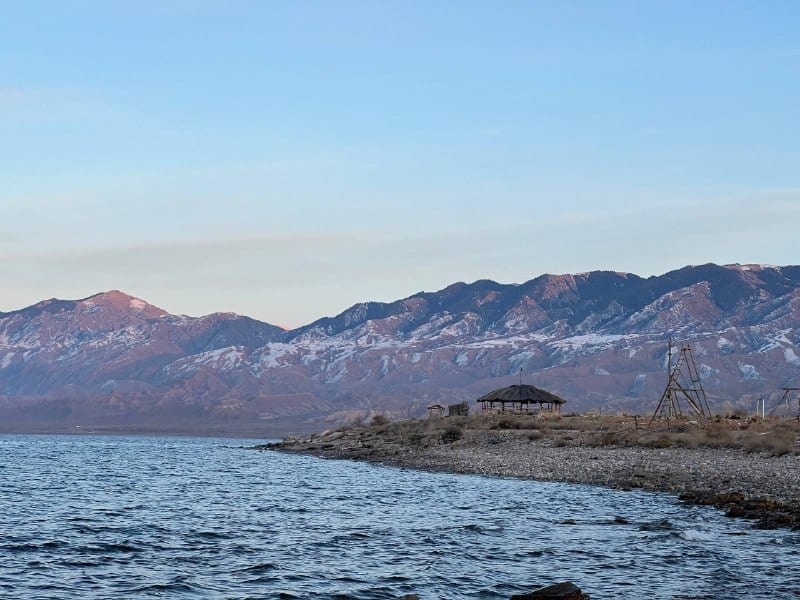
Good to know: Issyk-Kul lake never freezes, even in the coldest winters. Its slightly salty water keeps it open all year. The lake also softens the climate on its shores, so towns like Karakol and Cholpon-Ata are often less cold than you'd expect.
What to pack
- A warm down jacket, thermal base layers, fleece, warm hat, gloves and a buff.
- Waterproof winter boots with good grip: streets and paths are often icy.
- Sunglasses and sunscreen: winter sun at altitude is strong.
- A swimsuit and flip-flops for the hot springs.
- If you plan to ski off-piste: full avalanche kit (beacon, shovel, probe), or rent through your guide.
Skiing in Kyrgyzstan
Karakol Ski Base
Karakol Ski Base is the country's main ski resort and the highest in Central Asia, with slopes reaching just over 3,000 m. It's about 20 km from Karakol town, in the Karakol National Park, a short taxi ride from your guesthouse.
What to expect:
- Season: the 2025-26 season opened on 30 November 2025. Normally the season runs from late November to late March, and the best snow is usually in January and February.
- Lift passes (2025-26 prices): adult day pass 1,400 som on weekdays and 1,700 som on weekends, children 1,000 som, plus 300 som for a non-refundable electronic card. That's roughly $16-20 for a full day. Prices are higher during the New Year holidays (around 31 December to 10 January). The 2026-27 tariffs are usually published just before opening, so check at the ticket office.
- Slopes: groomed runs for beginners, intermediates and advanced skiers, plus good freeride terrain off the upper lifts when conditions are safe.
- Rental and lessons: skis, snowboards and clothing can be rented at the base and in Karakol town, and instructors are available.
- Crowds: weekdays are quiet; weekends and holidays get busier with skiers from Bishkek and Kazakhstan, but queues are still short by European standards.
Getting there: Karakol is about 6-7 hours from Bishkek by marshrutka (shared minibus) or car along the north shore of Issyk-Kul, and the road is open all winter. In recent winters there have also been flights between Bishkek and Karakol (Issyk-Kul airport) a few times a week; check current schedules before you travel. From Karakol, take a taxi to the ski base (about 30-40 minutes).
Jyrgalan: freeride and ski touring
About 60 km east of Karakol, the small village of Jyrgalan has become Kyrgyzstan's freeride and ski-touring hub. There are no ski lifts: you skin up (or use a snowmobile) and ski down untouched slopes, often without seeing anyone else all day. The area is known as one of the snowiest parts of the Issyk-Kul region, and snow tends to come in big storms every week or two.
Important:
- Go with a qualified mountain guide. Avalanche risk in the Tian Shan is real. Unless you have solid avalanche training and your own kit, don't go off-piste on your own.
- You'll need touring gear: touring skis or a splitboard, skins and full avalanche equipment. Some of this can be rented in Karakol.
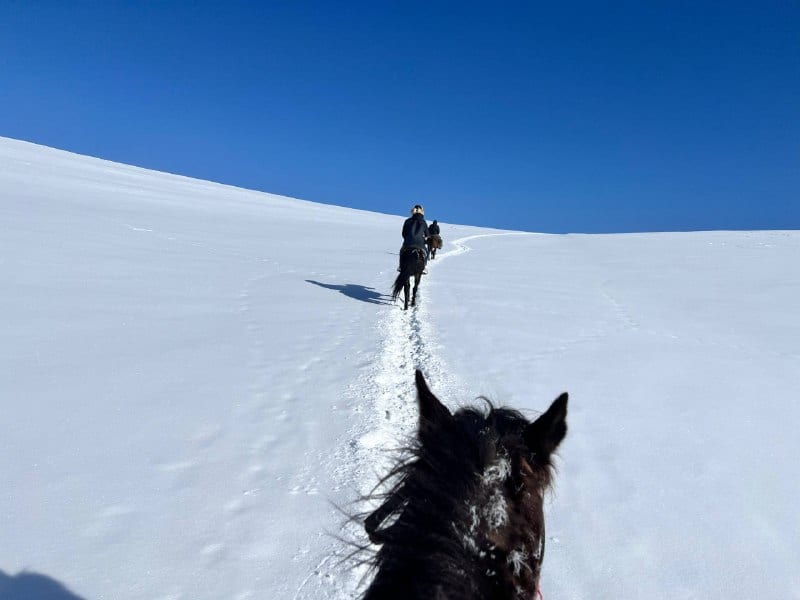
- Not a skier? Jyrgalan is also great for snowshoeing, winter horse riding and snowmobiling, with cozy guesthouses in the village. Guesthouses fill up with ski groups in January-February, so book ahead.
Ski bases near Bishkek
Only have a day or two? There are several small ski bases within about an hour of the capital, great for a quick day on the snow:
- Chunkurchak: around 30 km south of Bishkek, the most popular and modern option near the city.
- Kashka-Suu: about 35 km from Bishkek, at roughly 2,100 m.
- Orlovka: a family-friendly base in the Chui Valley, east of Bishkek.
- Too-Ashuu: on the Bishkek-Osh road, about 120 km from the city.
They're smaller than Karakol and busy on weekends, but passes are cheap and they're easy to reach by taxi.
Not a skier? What to do in Kyrgyzstan in winter
Soak in hot springs in the snow
Kyrgyzstan is full of mineral hot springs, and winter is the best time to enjoy them. Near Karakol:
- Ak-Suu (Teploklyuchenka): about 18 km from Karakol, easy to reach by taxi, with indoor and outdoor pools. A perfect way to end a ski day.
- Keremet-Suu in Chon-Oruktuu village, also near Karakol on the north shore.
- Altyn-Arashan: the most famous hot springs in the country, high in a mountain valley. It's open all year, but in winter the track is covered in snow, so getting there means a long snowy hike or a 4×4 when the road allows, and it's colder and more basic up there. Go with someone who knows the conditions.
Meet the eagle hunters
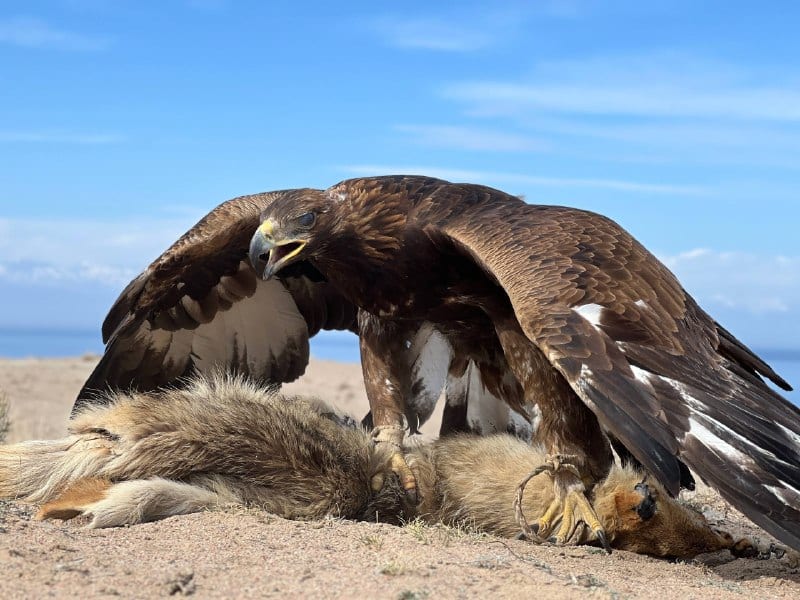
Hunting with golden eagles is an ancient Kyrgyz tradition, and it's a winter activity: the real hunting season runs from about November to February, when snow makes it easier to track foxes and hares. Around Bokonbaevo on the south shore of Issyk-Kul, local berkutchi (eagle hunters) offer demonstrations where they explain how the birds are trained, cared for and flown. Expect to pay around $20-40 per person. It's a quiet, personal experience in winter, very different from the summer festival crowds.
Explore the south shore and the canyons
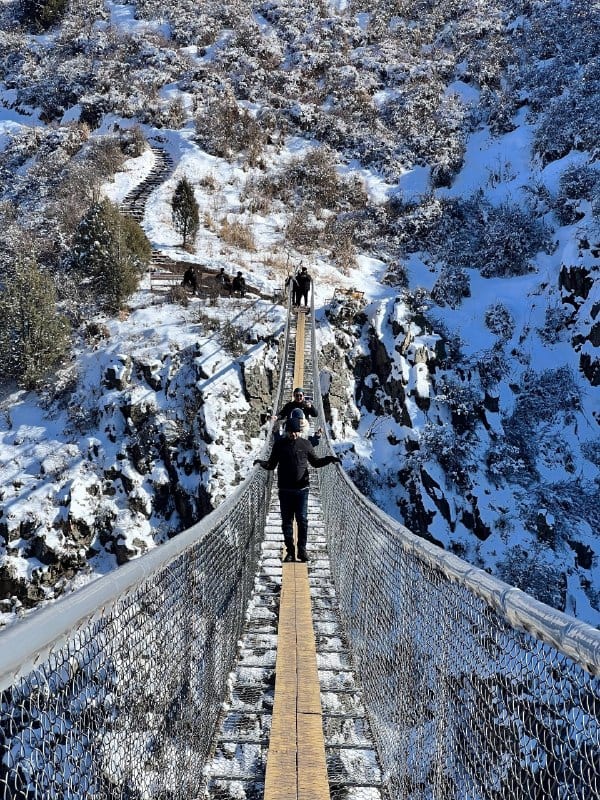
The south shore of Issyk-Kul is beautiful and peaceful in winter. Snow on the red rocks of Jeti-Oguz ("Seven Bulls"), the frozen waterfalls and gorges of Barskoon, and the wind-carved formations of Skazka (Fairytale) Canyon make for easy, very photogenic walks. Stay in a village guesthouse and you'll likely be the only guests.
Winter in Karakol town
Karakol is a nice base even beyond skiing: the wooden Holy Trinity Cathedral and the pagoda-style Dungan Mosque, cozy cafés, and the famous Sunday animal market early in the morning. Try ashlyan-fu (cold spicy noodle soup, locals eat it all year) and warm up with hot tea and boorsok at your guesthouse.
Bishkek in winter
Bishkek has good cafés, museums, bazaars and the Osh Bazaar for dried fruit and nuts. But be aware of one thing: winter smog. During the heating season, Bishkek has some of the worst air pollution in the world. According to the Asian Development Bank, winter levels can exceed WHO guidelines by up to 30 times. Our advice: spend one night in Bishkek on arrival, then head to Issyk-Kul and the mountains, where the air is clean.
7-day Kyrgyzstan winter itinerary
A relaxed week that mixes skiing, hot springs and culture. It works for skiers and non-skiers: just swap ski days for snowshoeing, horse riding or village walks.
- Day 1: Bishkek. Arrive, get a SIM card and som, have dinner in town. If you land early and want to ski straight away, Chunkurchak is an hour away.
- Day 2: Bishkek → Karakol. Drive or take a marshrutka along the north shore of Issyk-Kul (6-7 hours), with views of snowy peaks above the lake. Stop at a café in Cholpon-Ata on the way.
- Day 3: Karakol Ski Base. Full day on the slopes. Rent gear at the base or in town. In the evening, soak at the Ak-Suu hot springs.
- Day 4: Ski or snow day. Another day at the ski base, or a snowshoe walk in the forests of the Karakol valley. Non-skiers: cathedral, Dungan Mosque and the town's cafés.
- Day 5: Jyrgalan. Ski touring or freeride with a guide, or snowshoeing, horse riding and a snowmobile ride for non-skiers. Overnight in a village guesthouse.
- Day 6: South shore. Drive west along the south shore: Jeti-Oguz in the snow, an eagle hunting demonstration in Bokonbaevo, and a walk through Skazka Canyon. Overnight on the south shore.
- Day 7: Back to Bishkek. Return via Balykchy (about 4-5 hours from Bokonbaevo).
Have more time? Add more ski days in Karakol, a multi-day touring trip in Jyrgalan, or a couple of nights in a south-shore village.
What's closed and what to know before you go
Winter travel in Kyrgyzstan is very doable, but plan around these:
- High mountain areas are closed. Song-Kol, Ala-Kol, Tash Rabat and most trekking routes are snowed in from roughly October/November to May/June. Don't plan summer-style treks in winter.
- Mountain passes can close. The main Bishkek-Osh road crosses high passes like Too-Ashuu, where snowfall and avalanches sometimes cause delays and temporary closures. If you're heading to the south (Osh), fly. It's under an hour and much more reliable in winter.
- Avalanche risk off-piste. Stay on marked slopes unless you're with a qualified guide and carry avalanche gear. Read our mountain safety guide.
- Roads are icy. Allow extra time for every drive, and if you hire a car with a driver, make sure it has winter tires.
- Short days. It gets dark around 5-6 pm in mid-winter. Start travel days early.
- Bishkek smog. Keep your time in the city short during the heating season (October-March).
- Visa rules. Since 31 December 2025, citizens of 55 countries, including the USA, UK, Canada, Australia, most EU countries, South Korea and Japan, can stay visa-free for up to 30 days within any 60-day period. Check the rule for your passport before you fly; we cover this in our guide to getting to Kyrgyzstan from abroad.
How much does a winter trip cost?
Winter is low season for most of the country (except ski resorts during the New Year holidays), so prices are friendly.
| Expense | Typical cost |
|---|---|
| Guesthouse in Karakol (with breakfast) | $15-40 per night |
| Ski pass, Karakol (2025-26 prices) | 1,400-1,700 som (~$16-20) per day + 300 som card |
| Ski or snowboard rental | ~$12-18 per day |
| Taxi Karakol ↔ ski base | a few dollars each way, more if shared |
| Hot springs entry | from a few dollars |
| Eagle hunting demonstration | ~$20-40 per person |
| Marshrutka Bishkek → Karakol | ~$6-10 |
| Café meal | $3-8 |
Prices are indicative (about 87 som per US dollar) and higher over New Year. Always confirm locally.
Plan your winter trip with us
If you need a driver to the ski base or along Issyk-Kul, a guide for ski touring or snowshoeing in Jyrgalan, or a car with a driver for a few days, message us on WhatsApp or email us at azatbeyshenaliev1@gmail.com. We know the drivers and guides around Karakol and Issyk-Kul and are happy to help you find the right person.
Prefer not to deal with logistics in the snow at all? Our tailor-made trips are built around your dates and interests, skiing, hot springs, eagle hunters or all three, with transport, warm guesthouses and local guides who know these mountains in every season.
Common questions
Is Kyrgyzstan worth visiting in winter?
Yes, especially for skiing, hot springs and culture. Karakol has cheap lift passes and uncrowded slopes, Jyrgalan offers world-class freeride and ski touring, and the hot springs and eagle hunters around Issyk-Kul are at their best in winter. High-altitude treks and lakes like Song-Kol are closed until summer.
When is the ski season in Kyrgyzstan?
At Karakol Ski Base the season usually runs from late November to late March. The 2025-26 season opened on 30 November 2025. The best snow is typically in January and February. Smaller ski bases near Bishkek usually operate from December to March, depending on snow.
How much is a ski pass at Karakol?
For the 2025-26 season, an adult day pass at Karakol Ski Base cost 1,400 som on weekdays and 1,700 som on weekends (about $16-20), plus 300 som for a non-refundable electronic card. Children paid 1,000 som. Prices are higher during the New Year holidays, and 2026-27 tariffs are published shortly before the season opens.
How cold is Kyrgyzstan in winter?
It depends on altitude. Bishkek and the shores of Issyk-Kul are relatively mild, while the mountains are much colder: January nights at altitude can drop to around −20 °C. Winters are mostly dry and sunny. January is the coldest month.
Can you visit Song-Kol in winter?
No. Song-Kol lake sits at about 3,000 m and the roads are snowed in from roughly October to May. Yurt camps operate only in summer, usually from June to September.
Is it safe to travel in Kyrgyzstan in winter?
Yes, with normal winter precautions. The main risks are icy roads, mountain passes that can close after heavy snow, and avalanches off-piste. Fly between Bishkek and Osh instead of driving, allow extra time for road travel, and only ski off-piste with a qualified guide and avalanche gear.
Is Issyk-Kul frozen in winter?
No. Issyk-Kul never freezes, even in the coldest months. Its slightly salty water keeps it open all year, and it makes the climate on its shores milder than in the surrounding mountains.
Inspired?
Turn this into a real trip
Build your Kyrgyzstan adventure in 5 visual steps and a local expert sends a tailored plan within 24 hours. Free, no prepayment.