On paper, a guide is a guide. In the mountains of Kyrgyzstan, the difference between a local one and the rest is the difference between watching a country and being let into it.
We grew up in these mountains
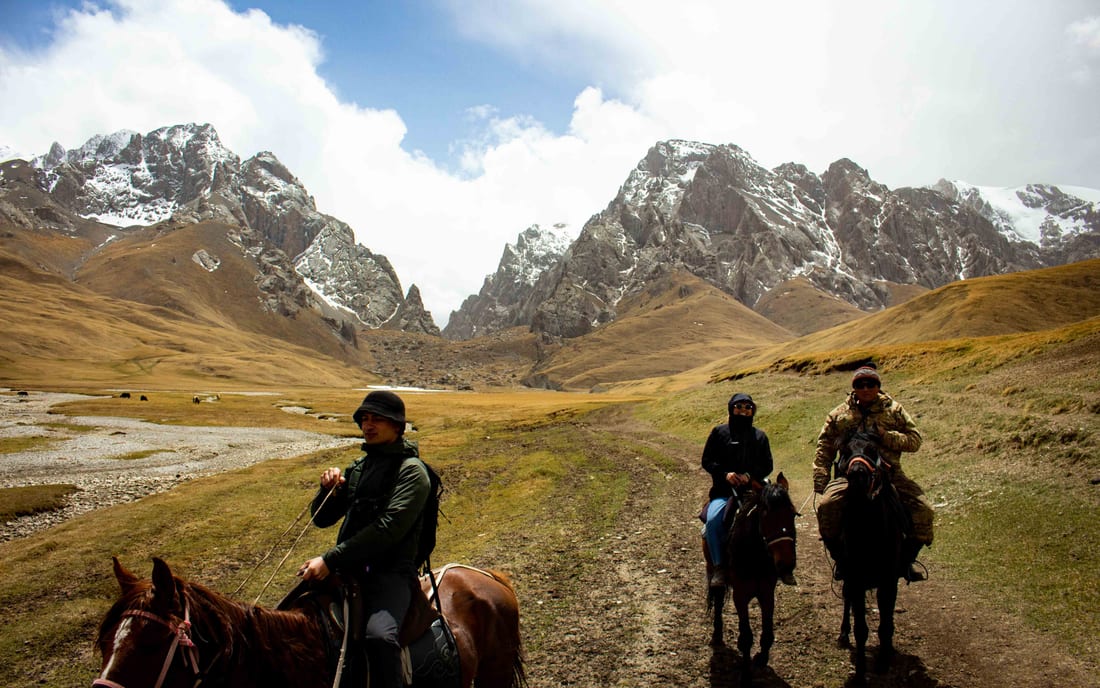
Our guides are Kyrgyz. We learned these valleys on horseback before we ever called it work, which pass clears first in summer, which family keeps a yurt by which lake, which river is calm in the morning and dangerous by afternoon.
That kind of knowledge does not come from a training course. It comes from moving sheep up to the jailoo as a kid, from riding to a neighbour's camp for tea, from being caught out by mountain weather enough times to respect it. I have been guiding since 2019, and the honest truth is that most of what makes a trip work I learned long before that.
What a local guide actually does for you
- Reads the weather and the passes, and changes the plan when the mountains say so
- Knows which river crossing is safe today, not in general
- Speaks Kyrgyz and Russian, so doors, and yurts, open
- Knows the families along the route, because we have been stopping at the same camps for years
- Turns a viewpoint into a story, and a stranger's tent into tea and bread
A day with a guide, hour by hour
Say we are riding toward Song-Kul. Before breakfast your guide has already looked at the sky, felt the wind and decided whether today is the day for the pass or the day for the lakeshore. Over tea he tells you the plan, and why. On the trail he rides where he can see everyone, adjusts stirrups, swaps horses if a pairing is not working. At the river he goes first. In the evening he is the one talking with the host family in Kyrgyz, which is why dinner can end in stories and laughter around the stove, not with a bill.
None of that shows up on an itinerary PDF. All of it is the trip.
The doors a local opens
Kyrgyz hospitality is real, but it opens fully when someone the family trusts makes the introduction. Arriving with a local guide means you are a guest, not a customer. You notice it in small things: the seat you are given, the questions you are asked, the bowl of kymyz (fermented mare's milk, the jailoo welcome drink) offered whether you asked for it or not.
This matters even more at the remote camps. The herders we stay with are our partners year after year, and that relationship is the reason the welcome feels nothing like a hotel check-in. More on how that works in where your money stays.
Local knowledge is a safety system
The most useful safety equipment in these mountains is judgement. Weather shifts fast above 3,000 m, rivers rise through the day as snow melts, and a pass that was fine on Tuesday can be a bad idea on Wednesday. A guide who grew up here makes those calls early and calmly, long before they become problems. The whole system, vehicles, first aid, satellite comms, is in how we look after you.
Horses matched to riders
If your trip involves horses, your guide is also the one matching each horse to each rider. Complete beginners get the steady characters and a gentle first day; confident riders get horses that like to move. Nobody gets a surprise. It is why people who have never ridden finish a multi-day trek feeling like they gained a skill, not survived an ordeal.
Your guide is the same person before, during and after the trip, message us and a real local answers, not a call centre.
Travellers always say the same thing at the end: the mountains were unforgettable, but it was the people who made it home.
This is the whole idea behind Azat Tours. "Azat" means free in Kyrgyz, and we want you to feel free here, and at home.
Meet them on the trail
Our guides shine brightest on the long rides: a full week in the saddle on the horseback riding tour (7 days), far off the map on the untouched mountains ride (6 days), or the big mix of riding and trekking from Song-Kul to Ala-Kul (7 days).
Inspired?
Turn this into a real trip
Build your Kyrgyzstan adventure in 5 visual steps and a local expert sends a tailored plan within 24 hours. Free, no prepayment.